Eugene Ntambara sentenced to life for genocide by Dutch court
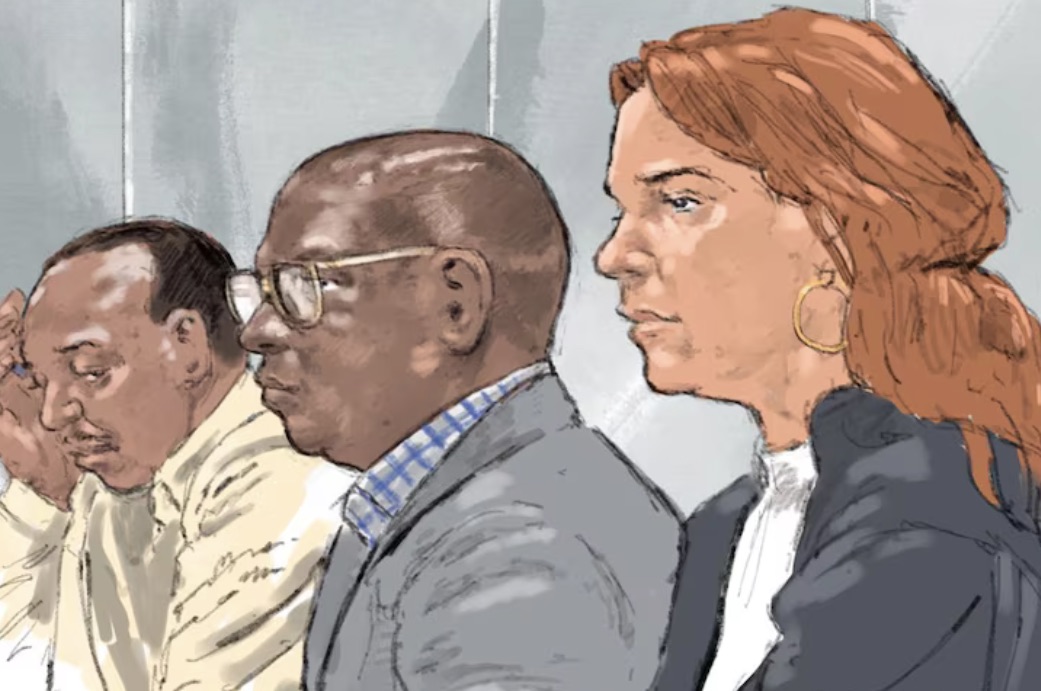
Ntambara listens in the dock on the first day of his trial
28 August, 2026, The Hague District Court: Eugene Ntambara, 66, was found guilty and sentenced to life impriosnment for his part in the genocide gains the Tutsi.
Ntambara’s trial had finally begun on 17 June, more than two years after his arrest in Ede on 14 February 2024. He has spent two years in the prison in Vught.
Ntambara was found to have been involved in the genocide against the Tutsi in the southern prefecture of Butare, in the area of Mbazi. Specifically, Ntambara had been involved as a leader in the horrific killing of around 3,000 Tutsi at the Byazi stadium in Mbazi on 24/25 April 1994 – including throwing a grenade into the crowd of refugees – as well as the destruction and looting of their property and homes. Tutsi refugees had been gathered at the football stadium – on the grass pitch and in the small stand. Killers – chanting ‘we will exterminate them all’ had moved in, and included soldiers who shot into the crowd and Hutu militia. Those not killed on the first day were left in agony before being ‘finished off’ the following day, 25 April. Witnesses noted many had begged to be killed because of the immensity of their wounds.
The accused denied his involvement and refused to look at survivors during the trial. He told the court he was a Tutsi himself – even though on his identity card he was labeled as a Hutu.
Rwandan authorities had requested his extradition in 2014 but this was refused as the Netherlands does not extradite citizens. Instead, six years later, it began its own investigation with prosecutors travelling regularly to Rwanda to interview witnesses and conduct on-site research.
Prosecutors had told the court in their closing argument:
“That was not a spontaneous explosion of violence stemming from instinctive hatred. No. It was a genocidal wave of violence, provoked and orchestrated through a targeted propaganda campaign that pitted members of the majority against everyone belonging to the minority: men, women, the elderly, children. Hundreds of thousands of victims, hundreds of thousands of perpetrators. Those perpetrators were mainly ordinary farmers who, after years of propaganda and war rhetoric, robbed and murdered their neighbors, friends, and colleagues with machetes and clubs. They were led and led in this by the local leaders.”
40 witnesses were heard by the Dutch International Crimes Team and 31 witnesses by the examining judge.
One excellent part of the Dutch judicial system is allowing survivors to speak in court. Five were present in the court. One noted : “I saw with my own eyes what he did; he shouldn’t lie about that,” says one of them. The perpetrators were neighbours, ‘people you used to play football with and share meals with’. Even 32 years later, the genocide is still palpable. “Sleeping sometimes feels useless because it leads to nightmares,” says a victim. “At night, your brain returns and the memories come.”
The prosecution, during their sentencing demand, noted:
“The defendant, as a local official, participated in the plundering and destruction of the homes of Tutsis, some of whom had already been displaced and others who fled their homes as the attackers approached. To the extent that they survived the genocide, they truly lost everything: their homes, all their belongings, their livestock, their dreams for the future. Many of them were driven to the Byiza stadium, where they thought they would be safe. However, some 3,000 Tutsis were murdered there in a horrific manner. The few survivors, such as the victims present here at the hearing, must live forever with traumatic memories of the dark days of April 1994. They lost countless family members and friends. Ordinary citizens, many of whom were children and elderly people, who had done nothing wrong. They were exterminated solely because of their ethnicity.”
Ntambara had fled to the Netherlands in 1998, and worked in care home