Ferdinand Nahimana and Fr. Emmanuel Rukundo: Convicted genocidaires turned down for extra UN cash handout

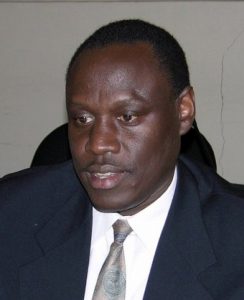
Nahimana – inciting genocide with radio RTLM; Fr. Emmanuel Rukundo – guilty of genocide and murder
Update: 4 August – Nahimana’s cash handout is ruled out on appeal
Three UN judges have thrown out the latest effort by two convicted genocidaires to get another UN cash handout of $10,000 each for what they euphemistically termed ‘humanitarian aid.’ In a nine page appeal court verdict they rejected an effort by RTLM Hutu hate radio creator Ferdinand Nahimana to get ‘additional financial support’ from the UN while he stays in Mali awaiting what he hopes to be a new life in Belgium. Nahimana – convicted of crimes against humanity, genocide, conspiracy and direct and public incitement to commit genocide – has been in Mali since his early release by the controversial Judge Theodore Meron in 2016.
In January 2023, noting that the 7 former ICTR detainees now in Niger had been given another $10,000 hand out by the UN, Nahimana demanded the same for him. The genocidaire priest Fr Emmanuel Rukundo did the same. The appeal judgment did note a ‘duty of care’ to the former genocidaire but was at pains to also mention its obligation from this was limited to the ‘circumstances at hand’.
‘The Appeals Chamber recalls that the Mechanism has the duty to ensure the welfare of acquitted or released persons pending their relocation, and to that extent enquire whether their life or liberty would be at risk upon relocation. The Appeals Chamber, however, emphasises that this duty neither continues indefinitely nor dictates what the obligation entails – the extent of the enquiry is limited to the circumstances at hand and the applicable legal framework. In the present case, Nahimana has not shown that this duty mandates the relief that was denied in the Impugned Decision’.
Nahimana’s legal team to fight for this cash included the high-powered UK barristers Diana Ellis and Joanna Evans from the legal chambers at 25 Bedford Row, London.
27 April 2023
Having set a shocking example of UN generosity by deciding in January 2023 to pay out $10,000 to 8 former detainees in Niger, the UN now seems to have tried desperately to close the stable door on its ever generous largesse by refusing two convicted genocidaire, Ferdinand Nahimana and the Catholic priest Fr. Emmanuel Rukundo, their separate requests for $10,000 ‘humanitarian aid’ while they await their requests to relocate to comfortable retirements in Europe. Unsurprisingly, both of the genocidaire have appealed the ruling.
In separate judgements issued on 20 April 2023, the former President of the UN Residual Mechanism, Carmel Agius decided to end this particular UN gravy train of cash handouts. He noted that in Nahimana’s case in Mali, the UN had agreed no such on-going financial duty of care and therefore Nahimana’s ‘arguments, comparing his circumstances to those of the Relocated Persons, are insufficient to demonstrate that the Mechanism has the responsibility to provide him with additional financial assistance akin to that extended to the Relocated Persons.’ Instead the Mechanism would continue to support Nahimana’s relocation efforts to Belgium – and would cover his costs if this happened.
For Rukundo the judgement was the same – no to the requested cash handout, yes to continued support to relocate. It seems the good Fr. Rukundo still thinks the Catholic Church should spirit him away to a European country and give him a parish to work in. While the Catholic Church has – quite shockingly – chosen not to defrocked him and let him continue to say mass while he was in prison, Rukundo has yet to be given a new parish in Mali.
On 27 April, one week after the Mechanism decided to deny Nahimana, he appealed the judgement – as did Rukundo shortly afterwards. Judgment on this appeal is now awaited.
Ferdinand Nahimana had been released 10 years early from his 30-year sentence for public incitement to genocide and persecution and is currently living in Bamako, Mali. Fr. Emmanuel Rukuno, 62, was sentenced to 23 years for genocide, murder and sexual offences against a Tutsi woman and is also in Mali. Both men were released by Judge Theodore Meron in one of his last – but as ever sympathetic judgements towards the killers – in 2016.
Case history
On 23 January 2023, Nahimana wrote to the UN Mechanism demanding they pay him $10,000 living expenses, housing expenses of $1,560 per year, his medical expenses, and to instruct the Registrar to assist him in gaining a visa for family reunification in Belgium.
In 2019, his request for this visa had been turned down by Belgium which cited: ‘that the presence on Belgian territory of Nahimana Ferdinand represents a real danger for public tranquility, public order and/or national security. Considering that the threat is such that the family and personal interests of the person concerned cannot in this case take precedence over the safeguarding of national security; Consequently, the application for a family reunification visa is rejected on the grounds of national security.’
Nahimana has appealed this judgement twice but the matter is still awaiting a final Belgian state decision. Meanwhile, as he is still living in Bamako, Nahimana argued that in essence he was in the same position as the eight former ICTR detainees who are living at UN expense in Niger . In January 2023 they had successfully argued the Mechanism should pay them each $10,000 ‘living expenses,’ among other fees, while they awaited relocation to a new country. (see the separate article on this case). Noting this, Nahimana argued: ‘the MTPI [Mechanism] must provide me, through its Registrar, with living expenses in the same amount as those in Niger, i.e. $10,000; the cost of my accommodation 130 dollars per month, or $1,560 per year; medical expenses in such amount and under such terms and conditions as the MTPI may determine. It is understood that this assistance is temporary and humanitarian; it will last for the time it takes to obtain a visa for family reunification in Belgium.’ In March the demand was still under consideration by the Mechanism.
The decision for the UN was whether it should continue to pay out to support in their daily lives genocidaire who had been released early – in effect costing tens of thousands of dollars annually and treating them like UN employees. With any relocation to Europe – Belgian in the case of Nahimana – still very much in the blanche as to whether it may happen given the reluctance of Brussels to welcome a convicted genocidaire – further generous donations to such individuals risks bringing the whole UN justice system into disrepute. It is already spending huge sums on paying lawyer fees, medical expenses and in its own legal time on support for individuals who, it can be argued, showed very little care for their victims but now demand it of the international community.
The UN Mechanism has made no such stipulation or generous bequest to Nahimana’s or Rukundo’s victims. It seems only the criminal is owed a duty of care by the International Community in the guise of the UN – not the victim.
Background of the two genocidaire

Nahimana on trial; picture credit: ICTR
Ferdinand Nahimana is one of the most infamous figures of the 1994 Genocide against the Tutsi. Born on 15 June 1950 in the northern prefecture of Ruhengeri, he originally intended to be a priest, finishing university studies in 1974 at the nascent National University of Rwanda. He took part in the anti-Tutsi pogroms in 1972/3 which was the trigger for the coup by army general Juvenal Habyarimana in July 1973. In the 1980s he studied at the University of Paris VII where his thesis was ‘Hutu Kingdoms in pre-colonial Rwanda’. A close confidante of the very powerful brother-in law of Habyarimana Protais Zigiranyirazo (‘Monsieur Z’), Nahimana was appointed head of the state Information Agency ORINFOR in December 1990. He used this position to stir up ethnic violence – notably that which led to the deaths of hundreds of Tutsis in Bugesera, according to reports by Amnesty International and FIDH in 1992/93.
In 1993-4 Nahimana was a key player in the creation and running of Hutu hate radio RTLM. Post genocide, he fled the country and was arrested in March 1997 in Cameroon and transferred back to the ICTR to stand trial. In December 2003 he was convicted of genocide, conspiracy and direct and public incitement to commit genocide, and persecution and extermination as crimes against humanity. He was sentenced to life imprisonment. The appeal court in 2007 overturned some of the trial court’s findings, while still finding Nahimana guilty of direct and public incitement to commit genocide and persecution as a crime against humanity. His life sentence was downgraded to 30 years.
Theodore Meron, who was one of five judges on the appeal bench, dissented from the judgement of his fellow judges against Nahimana, noting he would have also overturned Nahimana’s conviction for persecution as well. Meron, the only one of the five judges to hold this view, felt that Nahimana ‘did not personally kill anyone and did not personally make statements that constituted incitement, and so his 30-year sentence was ‘too harsh.’
In 2016 Nahimana appealed to the President of the Mechanism for early release from prison, having served 20 of his 30-year term. The man he appealed to was the same Theodore Meron, now in his new capacity as President of the Mechanism, who had judged Nahimana’s original sentence as ‘too harsh. In weighing up whether Nahimana should be released, Meron concurred that his crimes were ‘very grave’ but he had behaved well in prison, had served two-thirds of his sentence (albeit there were still ten years to go) and had ‘shown some signs of rehabilitation.’ It meant that he was happy to order his immediate release.
This decision of Meron, was one of many he reached that led to the early release of ICTR and ICTY criminals. Acting purely on his own opinion, Meron did not seek the opinion of survivor groups, the Rwandan government, or those who had been affected by Nahimana’s actions. Nor did he seek to ensure that on release Nahimana would not participate in genocide denial or in undermining judicial cases going forward. It would be left to Meron’s successor as President of the Mechanism, Judge Carmel Agnius, in 2019, to reform the process totally to make it democratic and empathetic, in a manner already practiced by the special tribunal in Sierra Leone but ignored by Meron. Now the very serious nature of the crime of genocide would be fully taken into account, with the accused needing to acknowledge guilt and express remorse for the crime, make an apology/restitution to victims and renounce any violent ideology. The President must also speak to the trial judges who issued the sentence, and give the government of the home state as well as witnesses and victims a chance to comment on their feelings about any early release being granted. Moreover, once released, the genocidaire would be monitored and supervised.
Meron’s legacy is shameful. As a senior director at the Holocaust Memorial and Tolerance Centre noted in an email to the MICT president in 2018: ‘The early release of convicted genocidaires is an extraordinary and shameful affront to justice, not only for victims, survivors and their families, but for all people who believe in the international justice system. Releasing Rwandan mass murderers demonstrates to the world that the MICT trivializes the crime of genocide as well as ignores the United Nations Genocide Convention’.
Fr. Rukundo; picture credit: ICTR
Fr. Emmanuel Rukundo
Born in 1959, Rukundo became a priest and served in the parish of Kanyanza in the central Rwandan prefecture of Gitarama from 1991. In 1993 he was made a military chaplain of the Rwandan Armed Forces (FAR). In mid April to the end of May 1994 Rukundo used his position to participate and lead genocidal killings and abductions at St. Leon Seminary,, and at St Joseph’s College to abduct and kill a Tutsi Madame Rudaunga, and severely beat/kill her two children and two other Tutsis named as Justin and Jeanne, which he later boasted about. He also sexually attacked a young Tutsi girl here.
After the genocide Fr. Rukundo fled Rwanda and was given a parish by the Roman Catholic Church in Cologny, Switzerland where he worked as the parish priest. He was arrested in July 2001 on a warrant from the ICTR and after trying unsuccessfully to avoid extradition to stand trial in Arusha, he was transferred to Tanzania in September 2001.
On 27 February 2009, the ICTR found him guilty of genocide, murder and extermination as crimes against humanity and sentenced him to 25 years’ imprisonment. This was later cut to 23 years on appeal and after asking MICT president Theodore Meron for early release, he was given his freedom in 2016 after serving just 15 years for genocide. Despite Rukundo’s conviction for genocide he has still not been defrocked by the Catholic Church, and indeed in prison in Mali Rukundo continued to say mass and act as a pastor. It seems the most serious of crimes is still not enough for the Vatican to dismiss its religious. In 1996, Pope John Paul II noted:
“The Church itself cannot be held responsible for the misdeeds of its members, but those who have sinned during the genocide must have the courage to bear the consequences”. It seems the Church feels no responsibility even to disciplining those who have committed genocide.
One other interesting note at Rukundo’s trial was he was found to have seriously sexually assaulted a Tutsi girl, but the Chinese Judge Darquin Liu dissented from the other judges opinion in that he felt such an attack could not have caused the girl the serious mental harm she had told the court he suffered from as a result. Along with Rukundo’s early release, it was another baffling statement/action from the ICTR which showed how little empathy so many of its judges had with victims and the terrible and lasting effects of the crimes on survivors.
Rukundo was just one of many priests and religious to take part in the genocide.